

The global sports landscape is rapidly focusing on the 2026 FIFA World Cup, set to be co-hosted by the United States, Canada, and Mexico. As the countdown to kickoff shortens, international broadcasting deals are mostly finalized. A surprising copyright agreement from Hong Kong has stirred the industry: Richard Li’s PCCW has secured exclusive broadcast rights for the World Cup in the Hong Kong Special Administrative Region. The deal, closed without prior market rumors, shot to the top of local trending topics immediately after the official announcement, catching many observers off guard.
On May 8, PCCW released a formal statement on its website and major financial platforms, detailing the partnership. FIFA’s official website also updated its list of global rights holders, making the information publicly verifiable. The total cost of the rights acquisition amounted to $25 million, roughly 170 million RMB. The entire sum was funded through PCCW’s own cash flow, without any co-investors or third-party financing.
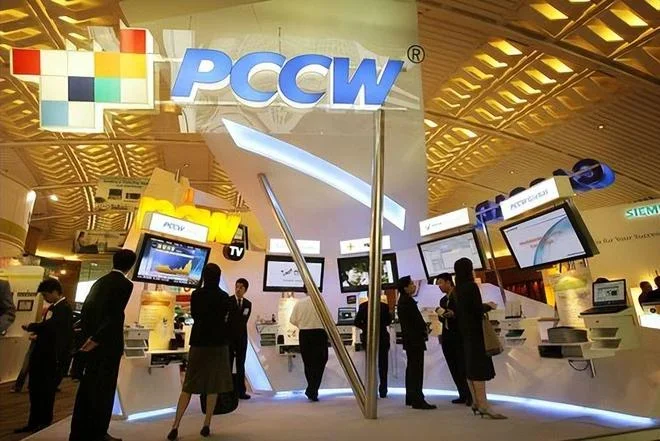
For Hong Kong residents, PCCW is an integral part of daily life. This Hong Kong-based conglomerate operates across communications infrastructure, digital media, smart technology, and strategic investments. Its subsidiaries are responsible for over 70% of the city’s fixed-line network and fiber broadband services. Over the years, PCCW has built a robust and efficient sports broadcast system, handling everything from live TV production to content distribution.
Richard Li serves as Executive Director and Chairman of the board, overseeing corporate strategy and major decisions. While his family background is well known, capital markets value his independent judgment and decisive execution. The World Cup rights acquisition took only 11 working days from evaluation to signing, a rapid move when most competitors were still hesitating, showcasing his team’s ability to seize the window of opportunity.
The 2026 World Cup marks a historic expansion, with 104 matches scheduled from mid-June to late July 2026. The three host nations span six North American time zones, presenting unprecedented coordination challenges. Notably, over 80% of matches will kick off during Asia’s prime-time evening hours, significantly boosting viewing convenience for regional audiences and reassessing the value of the rights.
To cater to diverse user needs, PCCW has introduced a dual-track broadcast strategy. Its premium pay-TV platform, Now TV, will offer all 104 matches in full, uncut, multi-language simultaneous live coverage. Meanwhile, free-to-air channel ViuTV will select high-profile matches such as the opening game, semi-finals, and final for live broadcast, lowering the barrier for ordinary families while balancing commercial and social impact.
This marks PCCW’s third consecutive time securing exclusive World Cup rights for Hong Kong. In the previous two tournaments, the company not only fulfilled technical requirements but also systematically developed professional commentary teams, real-time data visualization systems, and multi-device playback engines. This proven operational foundation provided the confidence for the significant new investment.
Capital market reaction has been measured. After the rights announcement, PCCW’s stock saw a slight intraday fluctuation before quickly stabilizing. There was no obvious sell-off, and institutional holdings remained stable. Most broker research reports indicate that the strategic premium of this investment far outweighs short-term financial returns, categorizing it as a typical long-cycle value play.
Across the broader Asian media ecosystem, similar top-tier sports IP acquisitions are not unprecedented. In early 2024, Singapore’s StarHub bid $120 million for exclusive Premier League rights across Southeast Asia for two years. StarHub also employed a “paid full access + free selected matches” distribution model, aligning with local willingness to pay and content consumption habits.
This Premier League acquisition and the World Cup deal share a common underlying logic: not obsessed with short-term cost recovery, but using top-tier events as user growth engines, brand trust anchors, and commercial monetization springboards. By leveraging events to boost platform activity, attract advertisers, and activate value-added services like subscriptions, virtual items, and interactive betting, this compound operational model is becoming the standard for emerging Asian media forces.
It must be acknowledged that Hong Kong’s local population base is limited and stable, making it difficult to cover the $25 million rights cost solely through regional traffic in the short term. In response, PCCW has initiated a “Greater Bay Area” strategy. Some free match signals will be extended via dedicated lines to the nine cities and two districts of the Greater Bay Area, potentially adding over 30 million viewers and significantly broadening effective reach.
Beyond live broadcasts, the company is deploying a full chain of derivative content. During the tournament, it will launch high-definition replay libraries, player highlight reels, tactical analysis shorts, and expert roundtable interviews, distributed across platforms like Douyin, Xiaohongshu, and YouTube Shorts. This creates a traffic loop of “live streaming driving short videos breaking out, and longer videos retaining audiences,” extending single-match buzz for over 30 days and maximizing the IP’s lifecycle value.
Many have attributed this decision to the inertia of the Li family’s capital. In reality, the Li family’s overall investment style is conservative, favoring cash-rich, anti-cyclical infrastructure assets. Sports rights, being light assets with high volatility and strong timeliness, differ significantly from traditional family preferences, which explains the widespread surprise.
However, Richard Li’s personal investment philosophy diverges from his family’s path. His recent major acquisitions have been in tech innovation, digital entertainment, and smart hardware, showing distinct risk appetite and forward vision. This World Cup rights purchase is a key part of his personally led media ecosystem expansion, a firm stance on his belief that “content is the gateway, and sports events are the infrastructure.”
As of now, the official broadcast rights for the 2026 World Cup in mainland China remain undisclosed. Negotiations are still in progress, with no legally binding agreements reached. Major platforms like CCTV, Migu, and Tencent Sports have not announced any match schedules or user booking channels, leaving mainland fans unsure of their viewing options.
The Hong Kong rights settlement provides a benchmark for mainland negotiations. The deal is transparent in price, clear in terms, and clear in execution path, offering strong industry reference. Rights buyers can optimize budget models, calibrate valuation ranges, and improve negotiation efficiency, reducing communication costs and bottlenecks from information asymmetry.
The sports rights industry is undergoing profound structural changes. Over the past decade, top-tier event resources were mainly operated by state-owned broadcasting systems. Now, private capital, market-oriented media groups, and internet platforms are rushing in, pushing the industry from “license monopoly” to “capability competition.” This healthy dynamic fosters diverse distribution forms, refined user operations, and more open cooperation mechanisms.
Audience expectations are also evolving. Single standard-definition broadcasts are history. 4K/8K ultra-high definition, free-view angle switching, AR tactical diagrams, real-time bullet-screen social interaction, and AI voice commentary are now basic demands for new-generation sports fans. To win long-term user loyalty, media organizations must simultaneously advance underlying technology and top-level content innovation, building a comprehensive service moat.
PCCW’s acquisition of World Cup rights may appear as a routine copyright purchase, but it represents a strategic upgrade for Asian private media forces. Capital is no longer content with deep local services but actively competes for global top-tier sports IP, using international resources to boost local ecosystem development. This “going out, bringing in, and upgrading” path not only strengthens the company’s global media presence but also injects new momentum into regional content industry high-quality development.
In the short term, this $25 million investment will test the company’s cash flow management and cost conversion efficiency. However, over a three-to-five-year horizon, the user assets, technical capabilities, brand value, and commercial interfaces accumulated from this mega sports IP will unlock value far beyond the rights cost. This seemingly unconventional decision is actually a rational choice aligned with industry trends and long-term strategy, setting a reference model for the entire Asian sports media industry’s advancement.
