

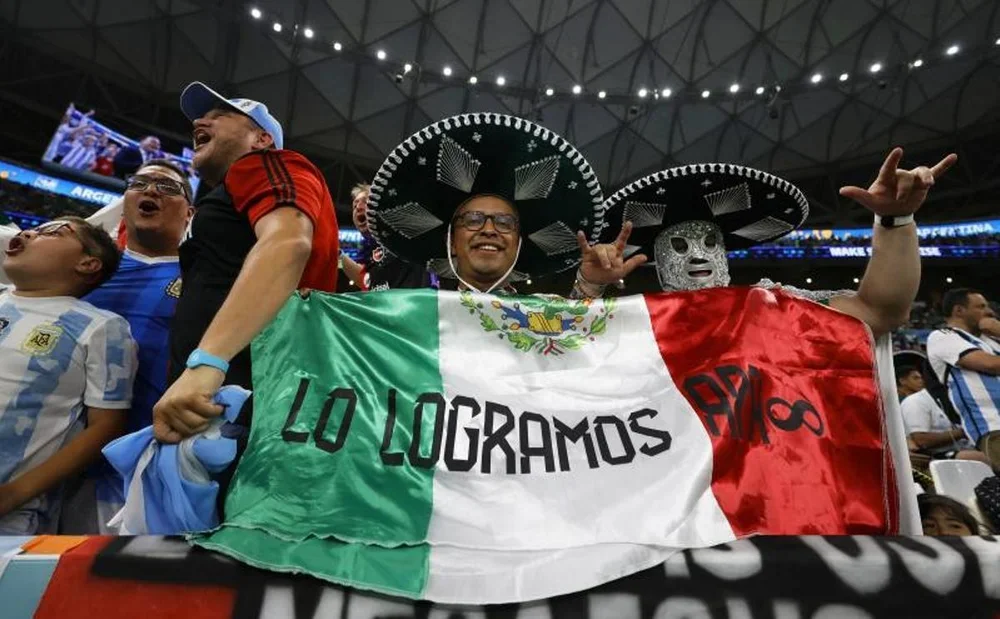
Mexican fans will enjoy the World Cup as hosts

A sweltering spring in Mexico City has sparked World Cup fever across the capital, pushing authorities to conclude the school year more than a month ahead of schedule. While the move might seem designed purely to let everyone enjoy the tournament, it hides a more pragmatic reality.
The Secretariat of Public Education (SEP), which sets the calendar for public and private schools throughout Mexico, stated that the decision is due to “high temperatures and the World Cup.” Though honesty is appreciated, the first reason could easily be overlooked. Sweltering days in Mexico City—with temperatures above 30°C—are undeniable, but according to the National Meteorological Service (SMN), the heat will drop in June to a forecasted maximum of 24.6°C. Furthermore, this measure was never taken before, even when Monterrey surpassed 34°C and Guadalajara hit 30°C in recent years.
Although the population of the three host cities makes up only 18.5% of the country (based on 2020 INEGI data), affecting just three out of 32 federal entities, the change impacts over 126 million people. The school year was shifted from July 15 to June 5.
**A Full House Means a Big Party—and Big Traffic**
This isn’t just a perk for locals to enjoy the World Cup; it’s meant to spare visitors from nightmare commutes. Living in Mexico City is a challenge—not just because it’s massive (14.6 times the size of Barcelona), but traffic clogs daily life, and the public transport system struggles under high density. Locals know the truth: “Traffic drops significantly when kids are on break.” It won’t cut travel time to under an hour everywhere, but at least it won’t be two.
**A Real Challenge in Motion**
The only test run for the World Cup in Mexico City, aside from the metro, offered a shuttle service from various points to the Azteca Stadium for the Mexico vs. Portugal match (March 28, 2025). While organizers promised trips of no more than an hour, many fans arrived at halftime due to traffic and poor stadium access—only one entrance was functional.
“There is a mobility logistics plan (for public transport and shuttles) to ensure 100,000 people arrive within six hours and leave within two,” said Héctor Ulises García, Secretary of Mobility for Mexico City.

Access to the Azteca Stadium during the Mexico vs. Portugal match on March 28, 2025
**The Best Fix for a Real Problem**
With the World Cup kicking off on June 11 at the Azteca Stadium, the three host cities are racing to prepare. In Mexico City, major roadworks have caused kilometer-long traffic jams that take hours to navigate. Opening matches are scheduled for 1:00 PM, and other games in Mexico will take place between 6:00 PM and 8:00 PM (CDMX)—peak hours for office workers and university students. Adjusting the school calendar to reduce congestion was the only variable the Mexican government could control.