

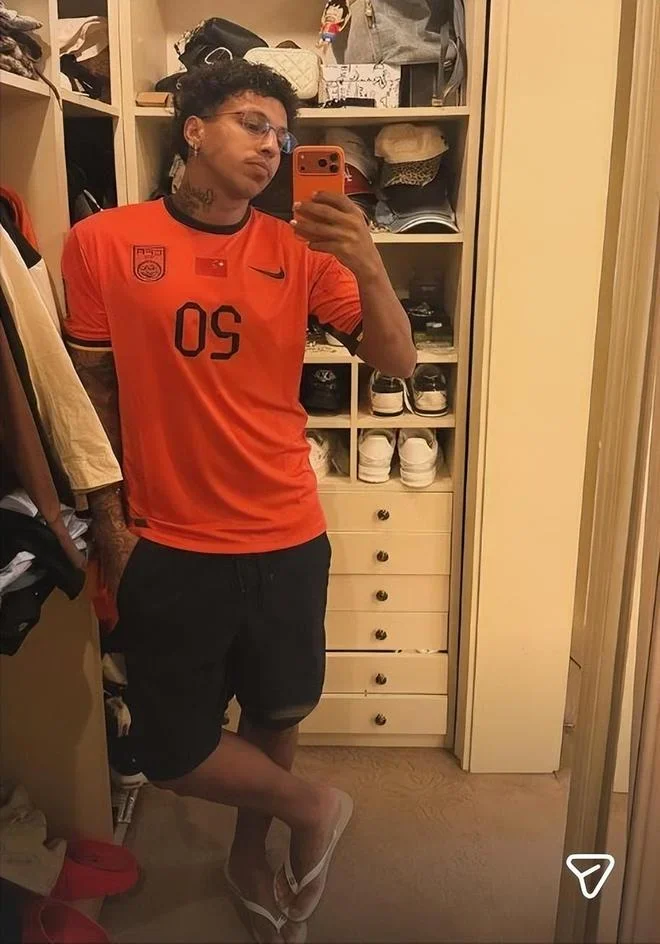
After publicly sharing a photo of himself wearing a Chinese national team jersey on social media and mentioning naturalization in a post-match interview, Cresan has sparked widespread speculation. When he openly stated, “Next year there is an opportunity for transfer and naturalization; if the national team coaching staff is interested, we can sit down and discuss it,” his proactive attitude gave fans plenty to think about.
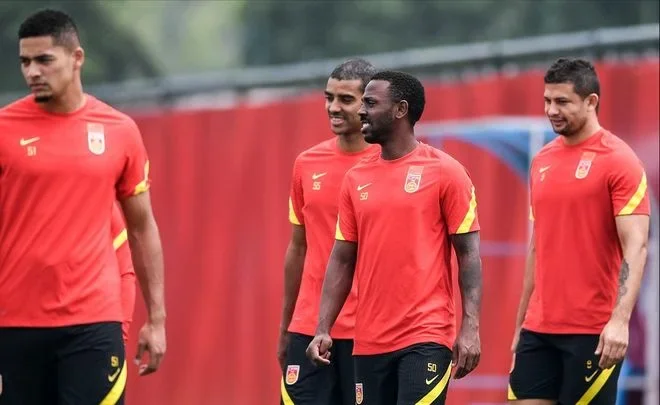
Cresan can complete the transfer procedure next year, while Chengdu’s Felipe and Romulo already meet the conditions to switch allegiance and represent China. Add to that Leonardo, who could qualify for naturalization as soon as 2028, and Serginho, who has already played for the national team—theoretically, China could build a Samba-style attacking line for the 2030 World Cup.
However, while the vision is appealing, putting it into practice is far from easy.
Firstly, on the policy front, around 2019, many clubs pursued naturalizations thanks to the Beijing Winter Olympics momentum and the strategy of betting on the 2022 World Cup. But officials who drove the Olympic naturalization policies and those who gambled on 2022 have since fallen from power for various reasons. Moreover, the 2022 gamble ended in chaos. Chinese football has only recently started to recover, and it cannot afford another risky move. A big bet on 2030 seems unlikely.
In reality, naturalization is not about whether the national team needs a player; it’s about whether it can satisfy the interests of multiple parties. Because naturalization is ultimately a business. The more it benefits all stakeholders, the more likely it is to be pushed forward.
For example, Evergrande originally naturalized five Brazilians. The list was provided by Lippi to the authorities and fully accepted, with Evergrande footing the bill. But behind this, Lippi’s team was paid by Evergrande and had already been part of the 2022 gamble. It’s even possible that Evergrande’s financial hole was already too big to cover at the time (though not yet exposed), and they wanted to use the 2022 bet to satisfy other business needs.
Among those five Brazilians, besides Elkeson whose agent was Lippi’s son, the other four also involved Lippi Jr. in the naturalization process. So Lippi was also generating income for his son.

Last year, Serginho’s naturalization had a different story. Serginho’s agent is Li Feng, who is also the agent of national team coach Ivankovic. Li Feng was also a high-level executive at Changchun Yatai and a go-to agent for Beijing Guoan. Therefore, pushing for Serginho’s naturalization meant: Ivankovic gained an extra midfield option for the national team; Yatai, struggling financially, offloaded Serginho’s high salary; Guoan, preparing for a league title push in 2025, added a Chinese player with foreign-level quality; Serginho himself got a better contract with longer terms and higher pay; and Li Feng, with interests in all parties, earned a commission in the middle.
So you don’t need to worry about how Serginho performs after naturalization—at least at the time, it satisfied multiple interests, allowing all parties to work together.
Now, Cresan’s agent is Li Yi, who is well-acquainted with national team coach Shao Jiayi. So, at Shao Jiayi’s level, Cresan’s naturalization shouldn’t be an issue (though it’s worth noting that foreign coaches like Lippi and Ivankovic had their naturalization demands met by authorities, but it’s uncertain if Shao Jiayi, a domestic coach, will receive the same treatment).
From Cresan’s perspective, his goal for naturalization is certainly to secure a longer and more lucrative contract. From Li Yi’s perspective, if Shandong Taishan doesn’t want to proceed with the naturalization or can’t afford it, he can easily push Cresan to Shanghai Port or Zhejiang—clubs with money and close ties to him. Regardless of which club becomes the new “client” for Cresan, Li Yi, as the agent, will make money.
Thus, Cresan’s proactive “overture” on naturalization puts Shandong Taishan in a difficult position.
In terms of team strength, if Cresan completes naturalization, Shandong can offload Delgado and bring in another foreign player. If the freed-up foreign slot can be used to sign a suitable new player, theoretically, Shandong Taishan would have the strongest squad in the Chinese Super League and could challenge for the league title again.
But given Shandong Taishan’s operations in recent years, do they really want to win the title? This season, they set a goal of “top three, compete for first,” but their actions haven’t matched that ambition. Since their actions show no real intention to fight for the championship, why would Shandong Taishan push for Cresan’s naturalization?
Moreover, in the past two or three years, Shandong Taishan’s shareholders have been bickering over capital injection and other core issues. If naturalizing Cresan means more expenses, who will pay? If Shandong Taishan doesn’t want to proceed, could another club step in? Only if someone is willing to pay a crazy transfer fee for Cresan. Otherwise, the resulting public backlash would be unbearable for the club and its major shareholder, Jinan Cultural Tourism. But in the current environment, selling Cresan at a sky-high price is impossible.
For now, Cresan’s naturalization remains a beautiful dream. However, once he publicly expressed interest in the process, regardless of how things develop, Shandong Taishan will be under immense public pressure.
