

The Giro d’Italia is a race steeped in tradition, dominated by giant budgets, sprawling team buses, and cycling dynasties that have shaped the sport for decades. That’s what makes the arrival of the Unibet Rose Rockets so startling—and so refreshing. This is a team born not in a boardroom or a bike factory, but around a camera, a series of outrageous challenges, and a group of friends filming themselves at the Tour de France. Yet here they are: smiling, filming, competing, and winning.
The Unibet Rose Rockets are not just a quirky internet gimmick or a viral footnote. They are a fully professional team that has landed at the Giro with five victories already in the first months of 2026, including a WorldTour win by Dylan Groenewegen. Their identity is so unique that they’ve carved a path in a sport that often speaks in hushed tones behind closed doors. They did the opposite: they turned on the camera.
Marcel Kittel, a key figure in the project and a driving force behind its media presence, explained the phenomenon to us during the early stages of the race. “The foundation of our team is a strong focus on high performance. We are very professional and work extremely hard, but we have the advantage of making media one of our core identities,” Kittel said. That captures it all. The Rockets understood before many that modern cycling requires more than just racing. You have to tell a story, to show, to let fans peek into a world that was once reserved only for those with team passes and bus seats.
“We want to show our story, tell our story. That requires good moments and stressful ones too,” Kittel added. And they do it authentically. Without too much polish. Wins are shown, of course, but also nerves, doubts, endless travel, bad jokes, parking lots, long faces, and the behind-the-scenes cycling that usually stays out of frame. Fans don’t just see results—they see people. And in an age of distance and pre-packaged messages, that’s gold.
The origin story goes back to Bas Tietema, Josse Wester, and Devin van der Wiel, three content creators who started playing with cycling on the ‘Tour de Tietema’ channel. Challenges with fans, wheelie contests, chaotic videos from the caravan, pizzas delivered to exhausted riders at the end of a Tour stage. It seemed like just entertainment—a fresh way to look at a solemn sport. But the joke grew into a massive community.
Then came the leap that seemed impossible. In 2023, the team was born. First Continental, then ProTeam. Then came the big invitations. Sponsors followed. And finally, riders who, until recently, seemed to belong to a different league.
The big catch was Dylan Groenewegen. A real sprinter. A Tour stage winner. A major name in bunch sprints. The Dutchman bet on a structure that, not long ago, was filming videos in parking lots and mountain passes. The bet paid off: four wins in 2026 and a first WorldTour victory that changed the perception of the project.
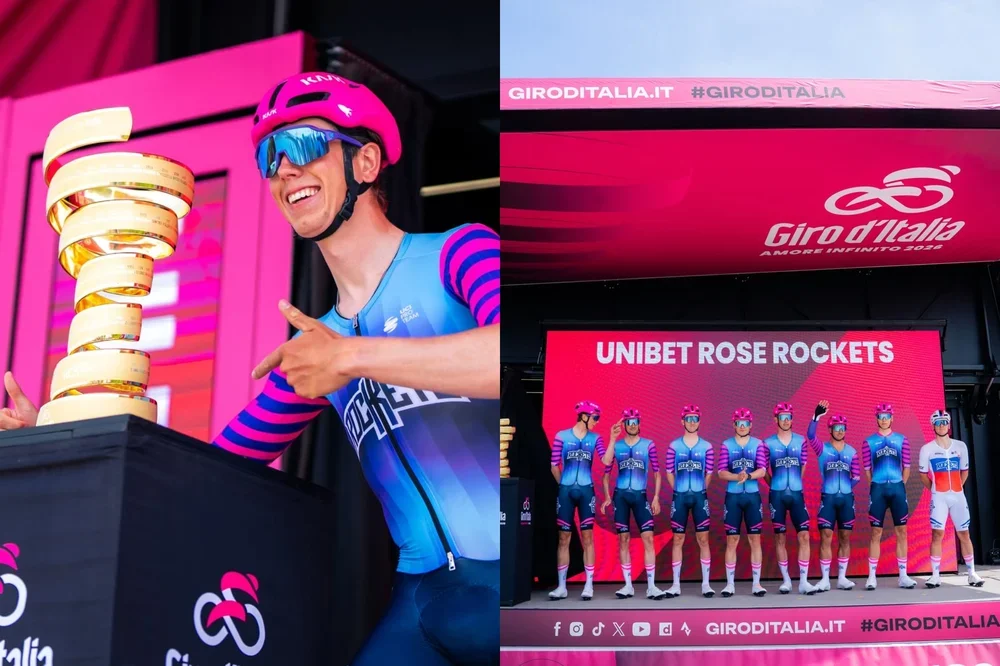
Dylan at this Giro.
But focusing only on results misses the point. The most interesting thing about the Rockets is how they’ve built an identity. In a peloton where many teams communicate the same way—same phrases, same videos, same press releases, same corporate packaging—they decided to be different. Cameras inside the bus. Transparency. Humor. Proximity. A more natural language. Less brand. More people.
Kittel sums it up: “The riders can focus on giving everything, but they don’t feel that pressure because we also show those moments. That makes us strong. It creates a good identity and a good atmosphere.”
And it works. Around the team, something has grown that looks less like fandom and more like a tribe. At races like Amstel or Roubaix, fans started appearing in the team’s colors—young people, families, curious folks who might never have connected with traditional cycling and now come to the races because someone opened a different window.
While many teams desperately search for ways to attract new audiences, the Rockets found the formula almost by accident: speak the language of the internet without making fun of cycling. Be modern without losing respect for the road. Show the kitchen without forgetting that the important thing still happens when the flag drops. Now comes the Giro. Their first Grand Tour. The test that separates a gimmick from a serious project.
In Bulgaria, there was a very real sense of excitement within the team structure. Not the fake euphoria of a marketing campaign, but the emotion of those who know they’ve traveled an improbable path.
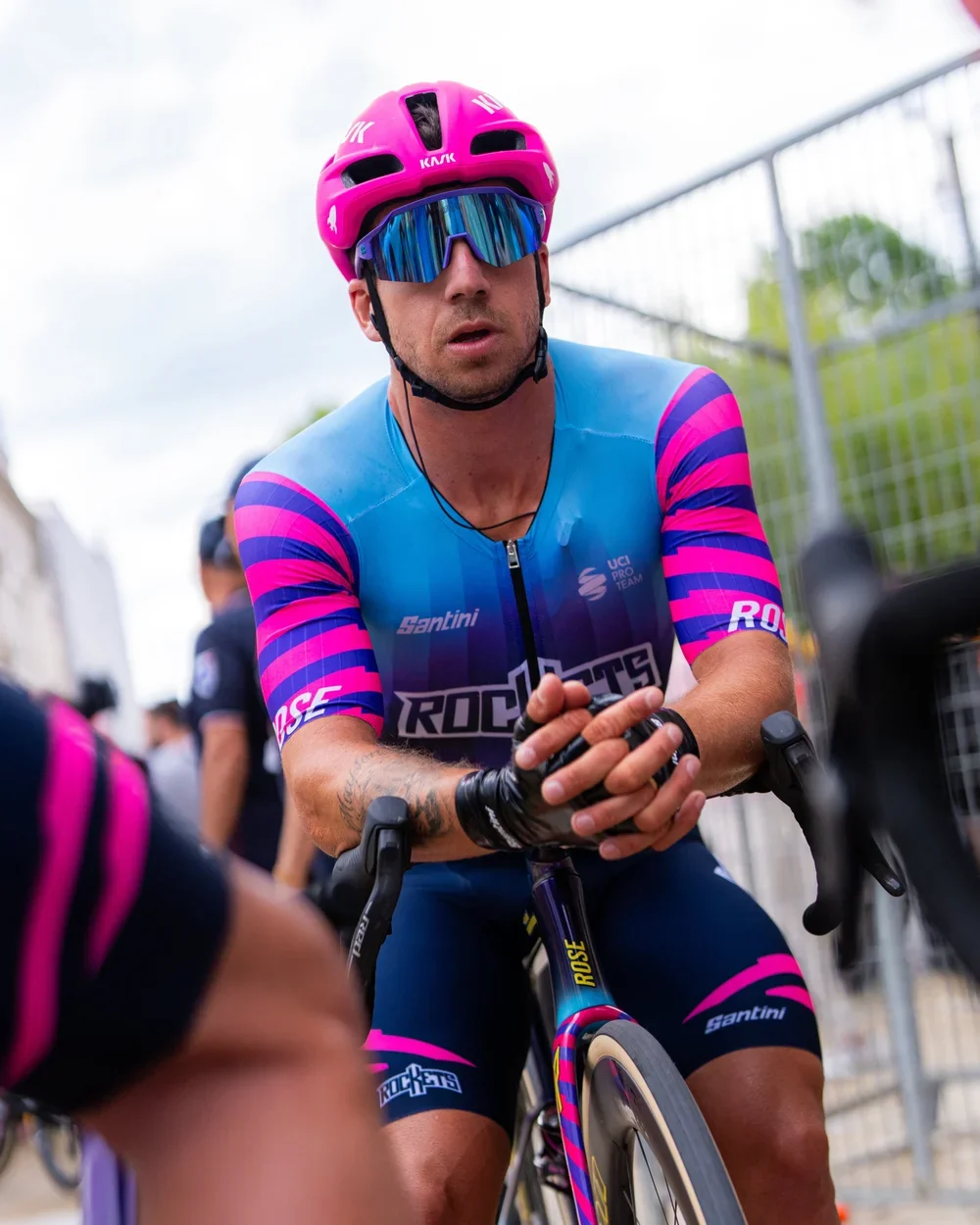
“We are very excited,” Kittel told us during those early stages. “There are a lot of enthusiastic people here, and I think this start has great potential.”
They may not yet have the budget of the giants, nor the history of the WorldTour powerhouses, nor the patina of nobility that comes from having crossed generations of cycling. But they have something that today is priceless: personality.
